

RBI Digital Lending Guidelines 2025 mark a clear turning point for India’s digital credit ecosystem. In simple terms, the RBI now expects clean disclosures, stronger borrower protections, strict data discipline, and tighter accountability across both regulated entities (REs) (banks/NBFCs) and lending service providers (LSPs) (fintech partners).
However, this is not just a compliance memo. It directly changes how fintechs design onboarding, underwriting journeys, disbursal and repayment rails, consent screens, grievance flows, and even UI choices in multi-lender apps.
If your lending flow isn’t KFS-first, consent-led, and audit-ready, you’ll need a product rebuild—not a patch.
Why This Matters Now
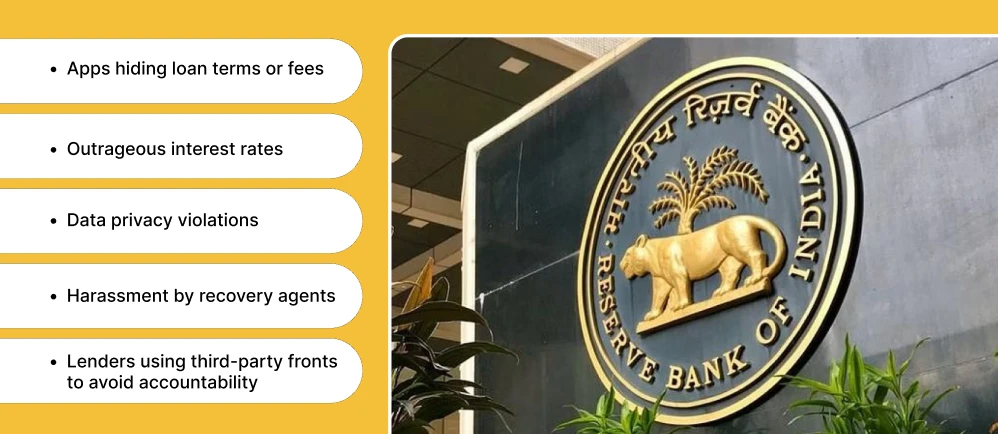
Digital lending grew fast in India, and it expanded credit access at scale. However, rapid growth also triggered repeat problems that regulators can no longer ignore:
- Apps hiding loan terms or fees
- Outrageous interest rates and misleading pricing
- Data privacy violations and excessive permissions
- Harassment by recovery agents
- Lenders using third-party fronts to avoid accountability
As a result, RBI’s 2025 framework aims to standardise digital lending and reduce borrower harm—while also making liability crystal clear between REs and LSPs.
Key Highlights: What Changed Under RBI Digital Lending Guidelines 2025
1) Who’s Covered
These rules apply to all RBI-regulated entities (REs), including:
- Commercial banks
- Urban, state, and central cooperative banks
- NBFCs (including Housing Finance Companies)
- All-India Financial Institutions
Additionally, they apply to LSPs that support the lending lifecycle—sourcing, underwriting support, disbursal journeys, servicing, collections, and recovery.
2) What Counts as Digital Lending
RBI treats any lending process as “digital lending” when key stages happen fully or largely through digital channels, such as:
- Loan sourcing through apps/websites
- Underwriting and approval workflows
- Disbursal and repayment journeys
- Borrower communications and servicing
Therefore, even if you are “just the front-end layer,” your product still sits inside the compliance perimeter.
3) Clear Contracts and Active Monitoring of LSPs
RBI requires REs to treat LSP partnerships as formal, accountable relationships. So REs must:
- Sign detailed contracts defining roles, liabilities, and responsibilities
- Vet LSPs for tech readiness, conduct history, data practices, and compliance posture
- Monitor LSP performance continuously
In short, REs can’t outsource accountability—even when they outsource execution.
4) Multi-Lender App Rules (Effective Nov 1, 2025)
If one app shows multiple lender offers, RBI expects fairness by design. Specifically, the app must:
- Show all matched offers, not selectively highlight a preferred lender
- Display each offer with lender name, APR, tenure, EMI, penalties, and a KFS link
- Avoid “dark patterns” that nudge borrowers into a specific lender choice
Consequently, marketplace lending apps must redesign offer pages and ranking logic to remove bias.
5) Transparency and Disclosures
RBI’s stance is simple: borrowers should know what they are signing. Therefore, lenders must:
- Provide a digitally signed Key Facts Statement (KFS) before disbursal
- Auto-share documents like sanction letters and policies via email/SMS
- Notify borrowers before assigning or changing a recovery agent
This pushes fintechs to implement reliable document delivery, digital signatures, and timestamped audit logs.
6) Disbursal and Repayment Rules
RBI now tightens money flow rails. So REs must:
- Disburse funds directly into the borrower’s bank account (exceptions may apply)
- Collect repayments directly into the RE’s account (not via LSP accounts)
Meanwhile, LSPs must not collect repayments unless RBI rules specifically allow it. Also, REs must pay LSP fees—borrowers should not carry hidden partner charges.
7) Cooling-Off Period and Prepayment
RBI introduces borrower breathing room. So REs/LSPs must implement:
- A minimum 1-day cooling-off period to cancel the loan
- Repayment of principal + applicable interest for the time used
- Only reasonable, disclosed processing fees
- Prepayment anytime without penalty
As a result, product teams must add cancellation flows, revised ledger logic, and KFS-aligned disclosures.
8) Grievance Redressal
RBI expects visible, usable grievance channels. Therefore:
- RE and LSP must appoint nodal officers
- Contact details must appear on the app/website and inside KFS
- If unresolved within 30 days, the borrower can escalate via RBI’s CMS portal
This makes complaint workflows a core product requirement—not a footer link.
9) Data Collection, Usage, and Consent
RBI pushes strong consent-based architecture. So digital lending apps must:
- Collect data only with explicit borrower consent
- Avoid accessing contacts, files, and call logs (restricted access)
- Provide controls to revoke consent, restrict sharing, and request deletion
In practice, fintechs must build a real consent layer—clear screens, toggles, retention rules, and event logs.
10) Data Storage and Localisation
RBI requires data to stay in India. So:
- Store personal data only in India
- If processing occurs outside India, delete and bring the data back within 24 hours
- Avoid storing biometric data unless the law permits it
Therefore, engineering teams must review cloud regions, vendor contracts, and data pipelines.
11) Privacy Policy Requirements
REs and LSPs must publish privacy policies that clearly state:
- What data do they collect
- Why do they collect it
- Which third parties access it
This is not optional copywriting—RBI expects transparency that stands up to scrutiny.
12) Cybersecurity Standards
RBI expects REs and partners to meet IT security requirements. So fintechs must align app security, logging, access controls, and incident readiness with RBI expectations.
13) Credit Reporting
RBI requires reporting for all loans—including short-term and deferred payment structures. As a result, fintechs must ensure consistent bureau reporting and reconciliation.
14) RBI DLA Reporting (Effective June 15, 2025)
RBI requires REs to report all Digital Lending Apps (DLAs) via the RBI CIMS portal. Also:
- The Chief Compliance Officer must certify the data
- RBI may publish the information, but RBI does not endorse apps
So compliance teams must set up internal checks, documentation, and reporting routines.
15) Default Loss Guarantee (DLG) Rules
DLG is when a third party (often an LSP) promises to cover loan losses. RBI now formalises and tightens this:
- Only registered companies can provide DLG
- DLG cannot replace proper credit assessment
- Total cover capped at 5% of the disbursed loan portfolio
- Back DLG with cash, FD, or bank guarantee
- Once invoked, do not reinstate DLG even after recoveries
- LSPs must disclose DLG portfolios on their websites
Additionally, RBI restricts DLG in specific cases (credit cards/revolving facilities, P2P NBFC loans, or where other guarantee schemes apply).
Example: Think of DLG as an “insurance promise” from a fintech partner. RBI now wants that promise to be real, backed, and limited—not marketing language.
Impact on Fintechs: What You Must Build Next
Product teams
- Build KFS-first journeys (no disbursal before KFS delivery)
- Add cooling-off + cancellation UX and ledger logic
- Redesign multi-lender offer pages for fair display and zero dark patterns
- Add clear borrower notifications for recovery assignment changes
Engineering teams
- Route repayments directly to RE accounts
- Add consent controls (revoke, delete, restrict sharing) with audit logs
- Reduce permissions to RBI-allowed scope
- Implement digital signatures + document delivery with timestamps
Compliance and legal teams
- Strengthen RE–LSP contracts with clear role/liability mapping
- Validate DLG structures (cap, backing, disclosures, certification)
- Set up CIMS reporting workflows and internal sign-offs

Deadline Reminders
- June 15, 2025: Report all DLAs via the RBI CIMS portal
- Nov 1, 2025: Implement fair display rules for multi-lender apps
Where BeFiSc Fits In
As the RBI Digital Lending Guidelines 2025 raise the bar, execution risk shifts from “policy understanding” to “workflow correctness.” BeFiSc helps teams reduce blind spots by enabling:
- Stronger identity and risk signal checks before and after disbursal
- Monitoring-ready workflows that support audit trails
- Cleaner partner accountability through API-first infrastructure
- Faster compliance rollouts without breaking product velocity
In other words, BeFiSc helps lending teams scale with fewer compliance surprises.
Conclusion
RBI Digital Lending Guidelines 2025 push the ecosystem toward transparency, consent-led data practices, accountable partnerships, and borrower-first controls. While this adds work, it also creates a clear advantage for fintechs that build trust into the product.
Therefore, treat this like a product upgrade sprint, not a legal checklist. Clean systems compound. Messy flows don’t.
Do RBI Digital Lending Guidelines 2025 apply to fintechs directly?
They apply to REs (banks/NBFCs) and also to LSPs that support lending journeys. So if you operate as an LSP, your app flows and contracts fall under the framework.
What is the Key Facts Statement (KFS) requirement?
The borrower must receive a digitally signed KFS before disbursal, clearly showing APR, charges, tenure, EMI, penalties, and key terms.
What changes for multi-lender loan marketplaces?
From Nov 1, 2025, apps must show all matching offers fairly, disclose offer details clearly, and avoid dark patterns that bias borrower choice.
What is the biggest data privacy shift for lending apps?
Apps must use explicit consent, restrict unnecessary permissions, and give borrowers controls to revoke consent and request data deletion.