
Introduction
In India’s rapidly digitizing financial ecosystem, GST verification has become a crucial step in business onboarding, compliance, and fraud prevention. Verifying whether a business is legitimately registered under the Goods and Services Tax system ensures that platforms work only with valid entities. By performing GST verification, businesses can confirm whether a GST Identification Number (GSTIN) exists in official tax records and whether the registration is active.
For fintech platforms, marketplaces, payment aggregators, and lenders, verifying business identities manually through government portals is not scalable. Platforms that onboard merchants or vendors at scale need automated systems that can instantly perform a GST number check, retrieve business details, and confirm registration status.
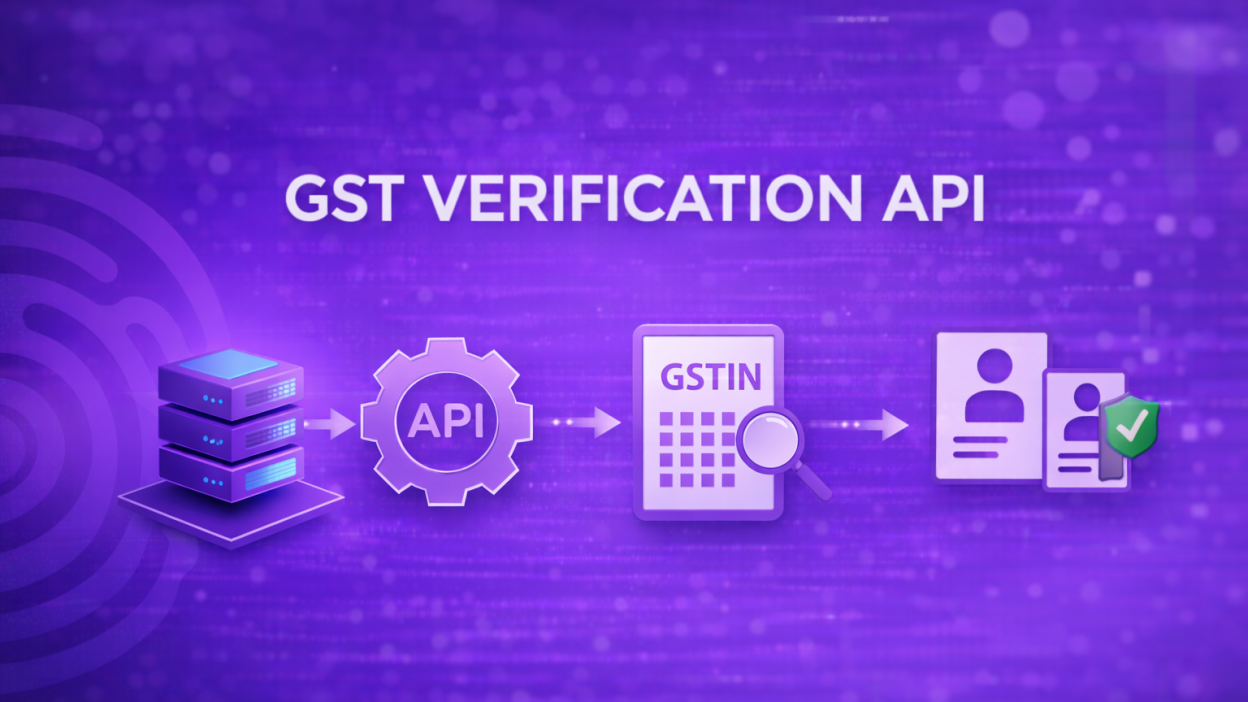
This is where GST Verification APIs become valuable. These APIs allow platforms to perform automated GST number check operations within onboarding workflows, retrieve official business information, and reduce the risk of fraudulent registrations.
In this guide, we will explain how GST verification works, what information can be retrieved from GST records, and how developers can integrate a GST verification API into their systems.
What Is GST Verification?
GST verification is the process of validating a Goods and Services Tax Identification Number (GSTIN) and retrieving the official business details associated with that registration.
When businesses perform a GST number check, they confirm:
- Whether the GSTIN exists in official records
- Whether the registration is active, cancelled, or suspended
- The legal name of the business
- The registered address and jurisdiction
Businesses often perform this validation before onboarding vendors, merchants, or partners to ensure that the entity is legally registered under the GST framework.
While companies can manually perform a GST check status using the government portal, automation becomes necessary when verification needs to happen at scale.
For reference, GST registrations can also be verified manually through the official GST portal maintained by the government.
What Is a GST Verification API?
A GST Verification API allows businesses to automate the GST verification process through programmatic requests.
Instead of manually searching GST numbers on the GST portal, developers can send a GSTIN to an API endpoint and receive structured business data instantly.
The API performs gst no verification and returns information such as:
- Legal name of the business
- Trade name (if available)
- Registration status
- Registration date
- Taxpayer type
- Registered business address
The response is usually returned in JSON format, making it easy for developers to integrate GST verification into onboarding workflows, compliance checks, and fraud detection systems.
Why Businesses Use GST Verification APIs
Faster Merchant Onboarding
Platforms that onboard merchants digitally need to validate businesses quickly. Automated gst number check workflows allow businesses to confirm registrations instantly during signup.
Fraud Prevention
Fraudulent entities may attempt to register using fake or invalid GST numbers. Automated gst verification helps identify invalid registrations, suspended GSTINs, or mismatched business details.
Compliance Requirements
Many regulated sectors require businesses to verify vendor identities before onboarding them. Performing a gst check status ensures that businesses operate with legitimate partners.
Data Accuracy
Manual data entry often leads to incorrect GST numbers. Automated GST no. check ensures that the business information captured by the platform matches official GST records.
Understanding the Structure of a GSTIN
Before performing a gst number check, developers should understand how GST numbers are structured.
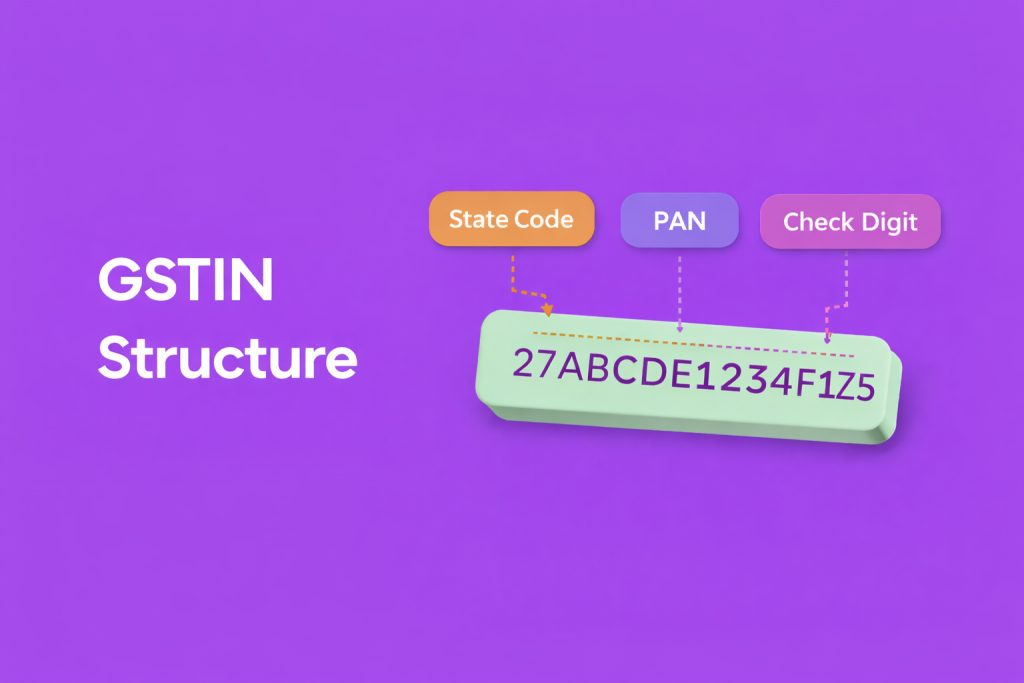
A GST Identification Number contains 15 characters.
Example:
27ABCDE1234F1Z5
Structure Breakdown
| Component | Description |
|---|---|
| First 2 digits | State code |
| Next 10 characters | PAN of the business |
| 13th digit | Entity number under the PAN |
| 14th digit | Default alphabet |
| 15th digit | Checksum digit |
Because GSTIN contains PAN details, many fintech platforms combine PAN verification with GST verification during business onboarding.
For more information about the GSTIN structure, the government provides guidance on the GST portal.
What Information Does GST Verification Return?
A typical GST verification response includes multiple data points about the registered business.
Business Identity Details
- Legal business name
- Trade name
- Constitution of business (proprietorship, partnership, company)
Registration Details
- GSTIN
- Registration date
- Registration status
- Taxpayer type
A gst check status confirms whether the GST registration is active, cancelled, or suspended.
Address Details
- Registered address
- State jurisdiction
- Centre jurisdiction
These details help confirm whether the information provided by the user matches official records.
How GST Verification Works (Technical Flow)
Although GST verification appears simple to users, several processes occur behind the scenes.
Step 1: User Submits GSTIN
During onboarding, the user enters their GST number.
Example:
GSTIN: 27ABCDE1234F1Z5
The system performs a basic format validation before initiating the gst number check.
Step 2: API Request Is Sent
The platform sends the GST number to the verification API.
Example request:
POST /gst-verification
{
 "gstin": "27ABCDE1234F1Z5"
}
API authentication credentials are included in the request headers.
Step 3: GST Data Is Retrieved
The API performs gst no verification by retrieving the corresponding registration details from GST records.
Step 4: API Response Is Returned
The API returns structured business data.
Example response:
{
 "gstin": "27ABCDE1234F1Z5",
 "legal_name": "ABC Trading Pvt Ltd",
 "registration_status": "Active",
 "taxpayer_type": "Regular",
 "registration_date": "2018-07-01",
 "state": "Maharashtra"
}
Step 5: Platform Uses Verified Data
The verified data can be used to:
- Auto-fill business details
- Perform identity checks
- Trigger KYB workflows
- Validate merchant information
The entire gst verification process typically takes only a few seconds.
Step-by-Step Guide to Integrating a GST Verification API
Step 1: Choose a GST Verification API Provider
Select a provider that offers reliable GST verification services. Important factors include response time, data accuracy, documentation quality, and request limits.
Step 2: Obtain API Credentials
API providers typically issue credentials such as:
- API key
- Secret key
- Access token
These credentials authenticate your application during gst verification requests.
Step 3: Build the Verification Endpoint
Your backend service should include logic that accepts GSTIN input and performs a gst number check using the API.
Typical process:
- Accept GSTIN input
- Validate GST format
- Send a request to the API
- Receive response
- Display verified business details
Step 4: Handle Different API Responses
Your system should handle various verification outcomes.
Valid GSTIN
Return verified business information.
Invalid GSTIN
Prompt the user to re-enter the GST number.
Cancelled Registration
Flag the entity for manual review.
Step 5: Integrate With Onboarding Flow
GST verification should be embedded directly into onboarding.
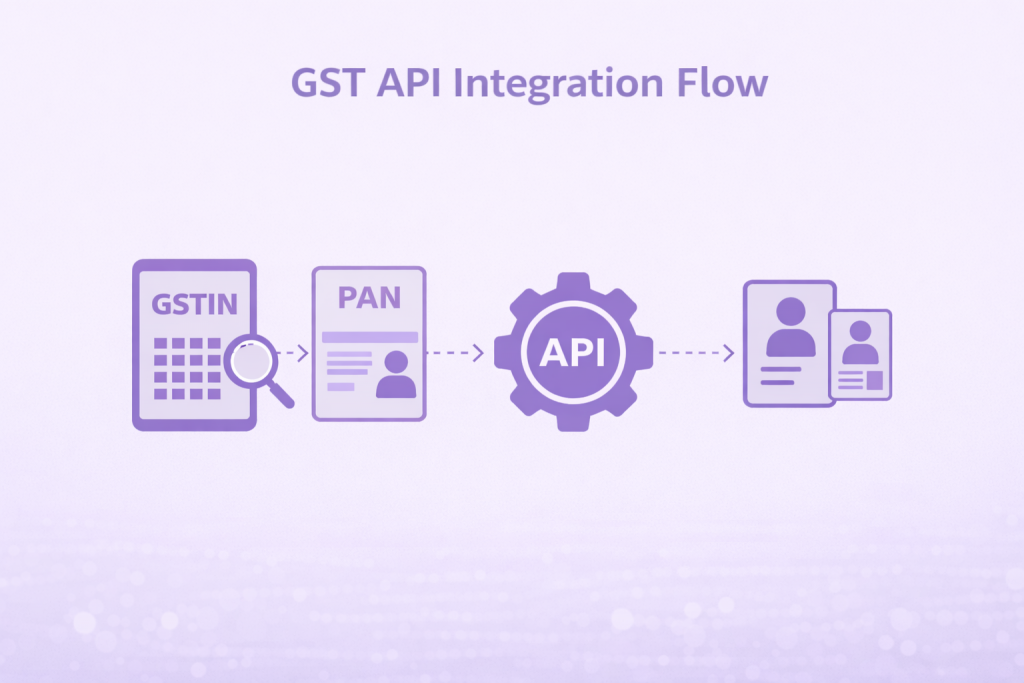
Example flow:
- User enters GST number
- The platform performs gst no check
- Business details auto-populate
- User confirms details
- Onboarding continues
Best Practices for GST Verification Integration
Validate Format Before API Calls
Perform basic format validation before initiating a gst number check to reduce unnecessary API requests.
Cache Verified Results
Caching recently verified GST numbers can reduce API usage while ensuring the gst check status remains accurate.
Combine GST and PAN Verification
Many platforms combine gst verification with PAN validation to strengthen identity checks.
You can also integrate PAN verification APIs as part of your KYB workflow.
Monitor API Performance
Track API performance metrics such as response time, error rates, and request volumes to ensure verification workflows remain reliable.
Final Thoughts
As digital onboarding expands across India’s fintech and digital commerce ecosystem, automated business verification systems are becoming essential infrastructure.
Manual verification through government portals may work for small volumes, but platforms operating at scale need automated solutions that perform instant GST number check operations and retrieve official business information reliably.
By integrating a GST Verification API, businesses can perform GST number verification, automate onboarding workflows, reduce fraud risks, and maintain accurate compliance records.
Conclusion
If your platform needs reliable GST verification, integrating a secure API can simplify the process.
BeFiSc provides developer-friendly verification APIs that enable instant GST number check, automated GST check status, and scalable business identity verification for fintech platforms, marketplaces, lenders, and compliance teams.
ExploreBeFiSc’s GST Verification API to streamline onboarding and strengthen compliance workflows.
Frequently Asked Questions
1. What is GST verification, and why is it important?
GST verification is the process of validating a GST Identification Number (GSTIN) to confirm whether a business is registered under the GST system. Through GST verification, businesses can retrieve official details such as the legal name, registration status, and registered address. This process helps platforms ensure they are onboarding legitimate businesses and reduces the risk of fraud.
2. How can businesses perform a GST number check?
Businesses can perform a GST number check by entering a GSTIN on the official GST portal or by using a GST Verification API. While the government portal works for manual checks, platforms that onboard vendors at scale typically automate the process using APIs to perform instant GST verification.
3. What information can be retrieved during GST verification?
A GST verification process typically returns important business details such as the legal business name, trade name, GST registration status, registration date, taxpayer type, and registered business address. Performing a GST check status also helps confirm whether the GST registration is active, cancelled, or suspended.
4. What is a GST Verification API?
A GST Verification API is a developer-friendly service that allows businesses to automate GST verification through programmatic requests. Instead of manually searching GST numbers, systems can send a GSTIN to the API and instantly receive structured business data. This enables automated GST number verification within merchant onboarding, compliance checks, and fraud prevention workflows.
5. Why do fintech platforms automate GST verification?
Fintech platforms automate GST verification to speed up merchant onboarding, prevent fraudulent registrations, and maintain compliance with regulatory requirements. Automated GST number check systems allow platforms to instantly validate GST numbers, retrieve official business data, and confirm GST check status without relying on manual verification.